Published
 Updated
🕑 16 min read
If your website traffic is plummeting, AI is far from the only culprit. There can be all sorts of reasons and zero-click search results are one of them.
One of them is a drop in your rankings. Another reason can be a falling click-through rate. A much bigger cause is the flood of algorithm updates.
Look at recent years and you see that Google has rolled out more and more updates. Most of them are small and subtle, so they slip by unnoticed. Even so, there is also a good number of major updates and Google usually announces those.

This has caused a great deal of upheaval in the rankings of businesses. Sometimes there are winners, sometimes losers. This is precisely a major reason why many business owners see their traffic fall.
Does this mean SEO no longer works? Certainly not. It simply means that many of the tactics you use today are probably outdated.
You also see a rise in 'zero-click' searches, where the searcher stays on the results page.
Let me give you a few examples.


At the same time, Google itself keeps growing enormously in popularity. For most websites, the drop in traffic is therefore less dramatic than the figures suggest. Google still sends a gigantic number of visitors on to websites.
With 'zero clicks', think of more than AI alone. Think of Google Business Profiles, Knowledge Panels and the direct answers in the search results.
Does a customer search for "pizzeria phone number Breda"? Then Google shows the number straight away. The customer no longer needs to click through to your website.

The searcher is perfectly served. Because Google keeps getting handier, overall usage grows too. That is the essence of zero-click.
People want direct answers. That is why you now see AI Overviews and the 'People also ask' section prominently at the top, often even above the familiar blue links.

Many searches are purely informational. Think of a buyer who searches: "what does the Incoterm DAP mean?".
This is a specialist question that is hard to turn into revenue directly. As an international haulier, the traffic you got from it probably brought in few actual orders anyway.
According to Semrush, AI Overviews appeared for 15.69% of searches in November 2025, after a peak of 24.61% in July, although this varies widely by country. The rollout still differs from place to place.
What you might not expect: Google itself reported an increase of 10% in search activity for the searches that show such an AI Overview.
The reason is actually simple. Over time, users grow more and more satisfied with the direct answers they get from these overviews.

Of course, the 'zero-click' challenge is real. Without AI Overviews or a Knowledge Panel, your click-through rate (CTR) is a lot higher. As soon as Google shows these elements, your CTR drops immediately.
At the same time, this brings an important advantage. We see that your own Google Business Profile (the Knowledge Panel for your business) significantly increases trust in your brand. It simply looks more professional and reliable than having none.

The key message for every business owner: an impression without a click still has value.
Strong brands build their authority through countless channels that do not always deliver a direct click. Think of social media, advertising or press coverage. It is all about creating touchpoints.
The number of touchpoints a customer needs before buying has grown considerably. Depending on your industry and the customer, dozens of touchpoints are often needed.

If you are missing at those moments, your competitor is there instead.
A mention without a click, such as in a Google Business Profile, builds your authority directly. The impact on trust is huge. It turns out that an overwhelming majority of consumers read online reviews to judge how trustworthy a business is.
Those reviews feature prominently in your business profile. Being visible without getting a click therefore directly increases trust in your brand.
Google is not alone. Platforms such as Instagram and TikTok also keep users on board, for example with built-in shopping features. So the key is to be visible everywhere, before your competitor is.
At the same time, total search volume on Google is actually growing because of AI. Satisfied users search more often, which makes the pie bigger. A lower click-through rate can therefore still deliver more visitors in absolute terms, so Google remains a top source of traffic.
Search behaviour is changing too. People increasingly ask long, complex questions ("best company lease car..."). The share of question-led searches has shot up, because AI can now answer them well.
Let's talk about the real opportunities. The focus in online marketing is shifting. For years, the number 1 position in Google was the goal. Now the real win is to be cited as a source in AI Overviews.
These AI answers appear more and more often, especially for longer, specific search queries.
The longer the keyword, the more likely it appears.

A search of six or more words has an extremely high chance of showing an AI Overview. The best way to appear in it is to write expert content that answers 'how', 'what' and 'why' questions. Think of a B2B consultancy writing an article on "how do I implement the new CSRD directive in an SME?".
AI Overviews already dominate in specific sectors, such as healthcare (>60%) and business services.

Because AI answers are not always accurate, Google needs reliable sources with strong content. Your expertise and the authority of your brand are therefore more important than ever.
Even today, check your AI answers.

Finally, remember that 'search' is bigger than Google alone. While Google dominates traditional web search (with a market share of ~90%), a large share of 'searching' happens on other platforms.
Customers search for products on Amazon or Bol.com, for services on LinkedIn, for inspiration on Instagram and TikTok. These are search engines too. The conclusion is clear: make sure you are present on every platform where your audience looks for answers.
The biggest shift is driven by the new generation. A large share of Gen Z and millennials also search extensively on TikTok, alongside Google.
If your content strategy focuses on Google alone, you miss the next generation of buyers. The key is to be present on the platforms where they search.
AI chatbots such as ChatGPT are fast becoming an important source of website traffic. In some sectors, such as e-commerce and business services, the growth of this referral traffic is explosive. AI chatbots are expected to account for a significant share of all referral traffic. Optimising your content so that AI uses it as a source therefore belongs to the present. It is necessary now.
How do you know whether your business is visible in AI answers? Searching manually is unreliable. As soon as you type in a search yourself to get a picture of the landscape, a language model brings far more into play.
The results of an AI chatbot depend on countless factors, such as the exact question, location and even the time of day. What you see differs from what your customer sees.

That is why specialised AI audit tools are now essential. These platforms are built specifically to analyse how and where your brand is mentioned in AI answers. They offer much deeper insight than traditional SEO tools.
The final conclusion: the goal goes beyond measuring your position. The goal is to actively shape your visibility in every place where your audience looks for answers.
What does all this mean for your strategy? The approach rests on three pillars.

In an unpredictable landscape, a strong brand is your only real defence. The goal is that customers stop searching for your product or service and search directly for your company name. Think of Coolblue (the Dutch electronics retailer), which has created its own verbs for ‘searching’.
For example MacBook = MACBOOK UPGRADE. = next level.
This is a big deal. A considerable share of all searches on Google is already 'branded'.
You build a strong brand by continuously offering value with unique content (blogs, webinars, events) that solves a problem or offers a new insight.
We are constantly building our own brand zoekmachinespecialist.com too. As a result, we see more and more enquiries arrive unprompted.
Because the number of direct clicks is falling, every visitor who does reach your website is worth their weight in gold. Especially when they arrive via an AI search, they have often already done their research and their purchase intent is high.
So you cannot afford to waste that chance. A slow, unclear or frustrating website is ‘game over’. The user experience on your site must be absolutely flawless, because you often get just one chance to make a first impression.

Keep it clear. It is getting easier and easier to cram as much as possible onto the screen. Think of the many info buttons that some leading websites hang next to almost every sentence.
That is how people lose their way.
After a long break, I used Marktplaats (the Dutch classifieds site) again. I went through the process of selling a second-hand item. For whatever reason, the sale fell through. I went from help centre to chatbot, back to the help centre, back to the chatbot, until after 1 hour I finally spoke to an actual person via the chatbot. Value of the item? €50.
Trust is the new currency. To be chosen as a source by AI and customers, you need to build authority. You do this with three tactics:


The focus is shifting from hunting for clicks to building a brand that is synonymous with trust and authority in your sector.
With 'zero-click', visibility alone falls short. You have to stand out and actively earn the click. You do this by offering value that an AI summary cannot replicate. The tactic has four parts:

AI Overviews are often superficial. To earn a click, your content has to go deeper. Give the user a reason to leave the search results. Think of:
Content is more than text alone. Visual elements are powerful ways to stand out and AI sees them as reliable sources.

GEO, or Generative Engine Optimisation, means optimising your content so that AI models can easily understand and use it. The good news: this fits seamlessly with the best practices of traditional SEO.
AI models draw their information from many places. They scan blogs, news articles, forums (such as Reddit) and video platforms. So the message is clear. Be present on multiple channels. Reuse your content smartly as well and turn one in-depth study into a blog article, a YouTube video, a series of LinkedIn posts, a stock video and an infographic. That way you feed the entire ecosystem the AI gets its information from.

The AI Overviews of Google draw their information from a broad mix of sources. The most common are in-depth blog articles and news media. Community forums (such as Reddit) and YouTube are also used as sources more and more often.
This means you need a multi-channel approach. The following actions are essential:

ChatGPT is considerably stricter than Google in its citations. The platform has a strong preference for established, factual and non-commercial sources. Your own blog or product pages are rarely cited directly.
Research shows that Wikipedia alone accounts for 27% of all citations in ChatGPT. Respected news media such as Reuters or the Financieele Dagblad (the Dutch financial daily) are favourites too.
The strategic conclusion for your business is therefore clear. To appear in ChatGPT, a strong Digital PR strategy is indispensable. The goal is to build authority in neutral and trustworthy ecosystems, outside your own website.
Think of concrete actions such as:

Gemini (the AI engine of Google) uses a combined approach. Like the traditional search results, it values in-depth blogs and news articles. Yet the absolute number one source for Gemini is YouTube.
This means video content is essential. A manufacturer of specialist machinery could, for example, publish short how-to videos, installation guides, e-books or customer cases on YouTube. This is exactly the in-depth, valuable content Gemini looks for to use as a source.
So the approach for Gemini is a mix of:
The AI search engine Perplexity is highly nuanced and prefers two types of sources: trusted experts and industry-specific review platforms.
Although blogs still make up a significant share (38%) of the sources, these are mainly non-commercial expert blogs.
What makes Perplexity unique is that it adapts its sources to the topic. If someone searches for 'the best accounting software for freelancers', the platform prefers to cite an in-depth comparison on a respected tech or finance website over a general marketing page.
This offers a huge opportunity for specialised SMEs to become the authority in their niche. The tactics for this are:

So what does all this mean? The key message is that your visibility in AI grows out of your wider strategy. It is the logical result of an excellent, broad approach to your marketing and SEO.
If you have the basics right, you are already 90% of the way there.
Ranking in AI is an outcome of good SEO and therefore not a discipline in its own right.
The tactics for being found by AI will feel familiar. It is a checklist of best practices:
To future-proof your business, there are three fundamental strategies worth embracing.
1. Build your own audience (First-Party Data)
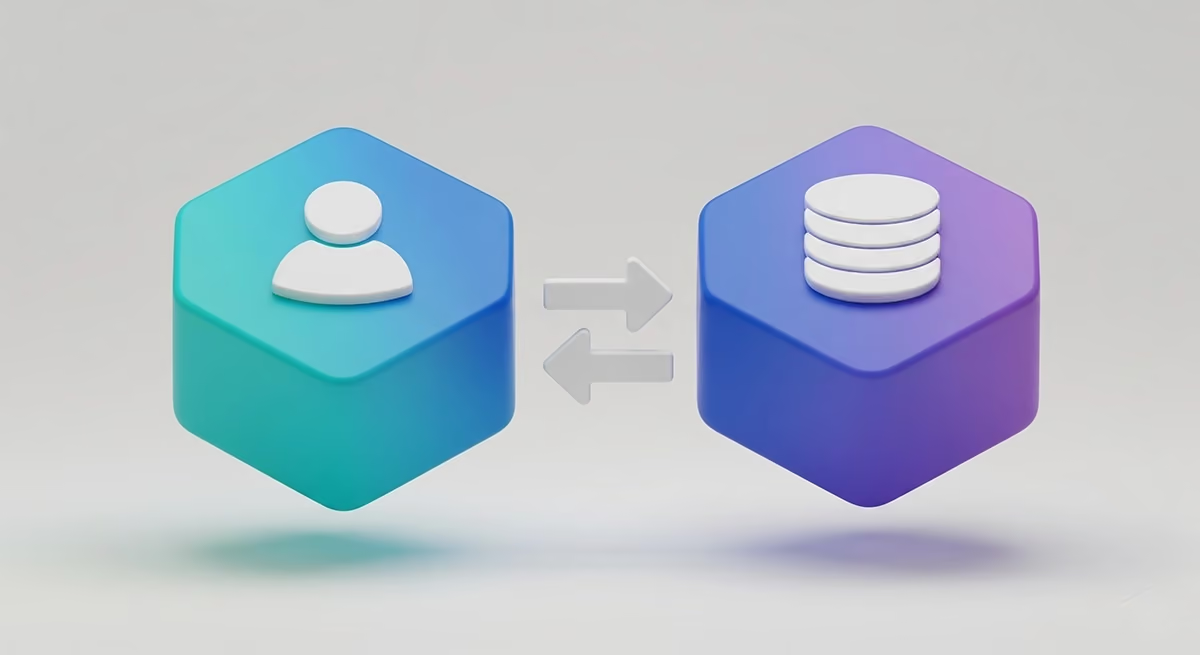
Google and Facebook are sharing less and less data, so the direct relationship with your audience is your most valuable asset. The answer to this is first-party data. This is data you collect yourself and have full control over.
The approach consists of three steps:

Treat SEO (organic) and Paid (paid advertising) as one reinforcing feedback loop rather than separate channels:
The insights from your ad campaigns feed your SEO strategy, while the authority of your SEO lowers your advertising costs.

The old KPIs such as clicks and sessions tell only part of the story. Your measurement model will have to evolve with the times. The focus is shifting from measuring traffic to measuring influence.
The new, essential metrics are:
A: Yes, absolutely, although the focus has fundamentally shifted. Where it used to be about the click, it is now about visibility and authority. A customer often needs dozens of touchpoints before making a purchase. Visibility in AI answers, on social media or in a news article builds trust during that journey. A click is a one-off action, while a strong brand that is visible everywhere influences the final purchase decision.
A: Become the expert an AI wants to cite. You do this by creating content that goes deeper than a standard summary (think of your own research, free tools, practical guides). Also build a multi-channel presence on the platforms AI uses as sources (blogs, news, YouTube, forums). Strengthen this with Digital PR (mentions in trade media) and make sure your technical SEO (Schema markup, E-E-A-T) is in perfect order.
A: By broadening your measurement model and focusing on influence rather than traffic alone. The new, essential metrics are:
The next step
Discover your biggest growth opportunities with a free opportunity analysis (worth €416) — a tailor-made report, free of charge and with no obligation.

About the author
Dominic Pietersz
Your dedicated point of contact
Dominic helps SMEs grow through Google and other channels. With his international experience, he turns challenges into concrete growth.
Follow Dominic on LinkedInInspiration · At the pizzeria round the corner, I saw how Google takes clicks while the takings keep coming in. That paradox became this piece about more revenue from fewer clicks.