Published
 Updated
🕑 23 min read / 👀 interactive content
I want to talk to you about the new rules of the game, because online search has changed completely over the past two years. Businesses are finally starting to accept it.
The big players too.
The focus was always on ranking in Google. That still matters, make no mistake. Google is still here and it still generates an enormous amount of revenue. Yet a shift is under way. You also want to be found in AI chatbots such as ChatGPT.
Although ChatGPT does not have the volume of Google (anyone who claims otherwise is simply lying), the platform is growing explosively. In February 2026, OpenAI reported 900 million weekly active users.
Being present there is simply a must. The data show that your audience is there and the traffic that comes from it remains extremely valuable.
You may wonder why that traffic is so valuable, even though less of it comes in. The answer lies in search behaviour.
By the time an AI user clicks through to your website, that person is already much better qualified. The intent is higher, which leads to significantly better conversion rates.
Research shows that a visitor who arrives via an AI search is worth 4.4 times more on average than a traditional organic visitor.
The total AI market is expected to grow to $3.5 trillion by 2033.
The choice has been made for you. My advice is to move with it.

How do you adapt your SEO mindset? The evolution of writing content is simple:
This means your content has to be of the highest quality, full of expertise and a human touch (E-E-A-T). At the same time, you need to structure it in a way that an AI can understand perfectly and wants to use as a reliable source.
Combine the best of both worlds.

You need to understand a shift in the foundations of SEO: we are moving from loose keywords to connected concepts (also known as entities in SEO).
The chart below explains how this works.
SEO used to be a game of making words fit.
Today, AI search engines try to understand the whole world the way a person does, in concepts and the relationships between them. An 'entity' is one such clear concept: your brand, a person, a product or a location such as Tilburg or Breda.
The AI goes further than recognising the name 'Bakker Bart'. It immediately maps all related concepts (Bakker Bart has left Breda, by the way):
Products are sourdough bread, sausage rolls, gluten-free options and orange tompouces (a Dutch custard slice).
Properties are "artisan", "organic", opening hours and "parking nearby".
Context is King's Day, weekend breakfast and "best croissant in Breda".
Sentiment is what the reviews on Google Maps say. Did the local newspaper (BN DeStem) write an article about you?
Together, all these connections form a Knowledge Graph (knowledge panel), a kind of digital brain. If you play into these concepts and their relationships on your website and social media, you make it extremely easy for the AI to see you as the most relevant, reliable baker in Breda and recommend you.
So you are no longer optimising for a single keyword. You are positioning your bakery within the wider network of taste, craftsmanship and local reputation.
So the AI understands all those concepts and how they connect. What does it do with them? It builds a complete summary of them in one go. Whether you love them or not, those summaries - those AI Overviews - are here to stay.
Yes, you know them: those ready-made answers Google now places at the top of the search results as often as it can. Google picks the best information from different websites and shapes it into one clear story.
There is a direct downside, though. If your business is mentioned in one of these handy overviews, you often get fewer direct clicks to your website. After all, the user already has the answer.
I need to talk to you about trust.
A mention in an AI answer builds a completely new kind of credibility, far more powerful than a traditional number 1 position in Google.
We are already hearing it from our clients. Potential buyers come in with the message:
"I asked ChatGPT who the best fish supplier in Brabant is. Your company name kept coming up. You must be the best. I am ready to sign."

This is a fundamental shift. One first-place mention is only the beginning. The real gains lie in being mentioned consistently across multiple AI platforms and different questions. When your brand turns up as the answer time after time, the user sees it as an objective recommendation from an expert.
The impact of this is enormous. We see even companies worth billions challenging their traditional suppliers and contacting parties they found solely because those parties were dominantly visible in AI answers.

And the best part? Often this happens entirely without a click to the website. The research takes place in the AI and the eventual contact happens directly via a platform such as LinkedIn.
This goes beyond traditional SEO. This is building a reputation so strong that the AI names you as the expert of its own accord.
A great question we often get is: "How can I rank on ChatGPT? How does ranking for AI differ from traditional SEO? And which platforms should I be on?"
As I explain it, the big difference lies less in the type of content you create and more in its location and distribution . In the past, you could get away with just one rock-solid blog on your own website.
Today, you need more than that.
AI models (LLMs) are like students studying for an exam. They draw their knowledge from a broad selection of reliable sources. Think of:
To win in the AI era, you need a 'Search Everywhere' strategy . It helps to be organically visible and active on the platforms the AI trusts and uses as a source.
For a B2B consultant, for example, this means sharing your insight through in-depth articles on LinkedIn, making explainer videos for YouTube, taking part in discussions on relevant industry forums. Also make sure you get mentioned in respected trade journals.

The essence of the story is that your content strategy has to become a distribution strategy. Be present in all the places where the AI 'learns'.
The sooner you take this on, the stronger your authority.
It would not be a proper conversation without talking about E-E-A-T . This principle is and remains the absolute core of your visibility, especially now that AI answers are becoming more and more important.
For anyone new to it, E-E-A-T stands for:
An AI model, just like a person, needs to know whether it can trust your information. E-E-A-T is your way of proving that you are an expert others can build on.
In the end, E-E-A-T is a promise rather than a bag of tricks. It is your promise to your customers (and to the AI) that you are the expert they can rely on.

The theme of authority is the common thread in the new way of searching.
We see a fundamental shift in customer behaviour. People used to look for the cheapest option. Today we are all in a hurry. We skip the cheapest and look for the best solution that gets us results fastest.

This is where AI is becoming more and more important.
You can see an AI chatbot as a personal, super-intelligent adviser for every user. This adviser helps them make the best choice.
When a project manager asks the AI 'what is the best project management software for a construction company?', the AI scans the entire web. It looks for the tool that is mentioned positively most often in reviews, on forums and in articles by experts.
So your goal is simple. Make sure your brand is associated with quality and expertise everywhere. Frequent, positive mentions are the proof for the AI that you are 'the best' out there.
Hunting for keywords is a thing of the past:
It is a new game with new rules. Do a SWOT analysis of your current approach and play to win.
Search volume matters less for AI and search engines
The next question is a logical one: "How do I build content that an AI model wants to trust and refer to?"
The answer is to stop thinking in individual blog posts about individual keywords. The new approach is to create complete content ecosystems that mimic the way AI connects information.
AI helps you see the deeper connections between topics. Instead of writing one article, you build a thematic cluster.
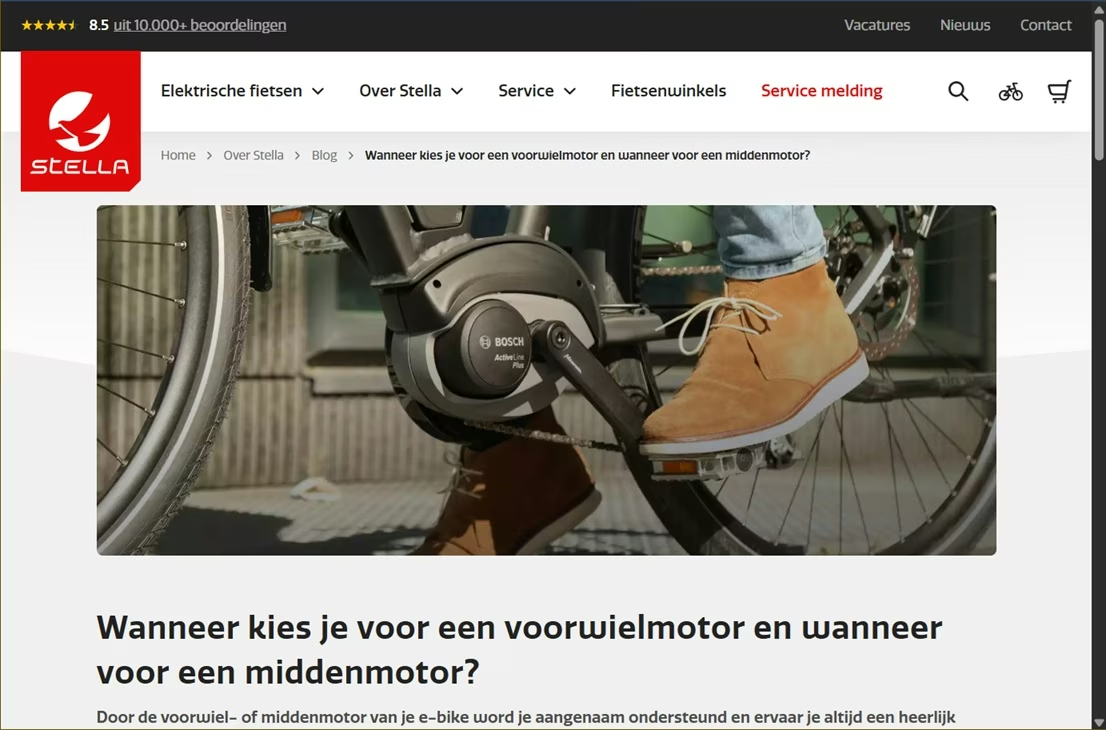
A practical example: a financial adviser goes beyond a single article on 'pension planning' and builds a complete ecosystem.
This depth is exactly what AI search engines reward now.
Your content ecosystem should go beyond text alone.
Think about how you can bring topics to life with videos, infographics and visuals. These different formats strengthen your authority and AI sees them as valuable, separate sources.
AI is a fantastic tool for generating ideas faster (ideation). Whether you are writing a text or using an AI music generator . The strategic direction, the unique angle and the in-depth expertise still have to come from a human strategist.
Use AI as your co-pilot and stay the pilot yourself.
The essence is to build a knowledge network within your own website that is just as rich and connected as the 'brain' of the AI itself.
I invite you to look at search volume differently. Search volume is no longer the holy grail. The intent behind the question is.
Someone who searches Google for a short, high-volume keyword is often still exploring broadly.
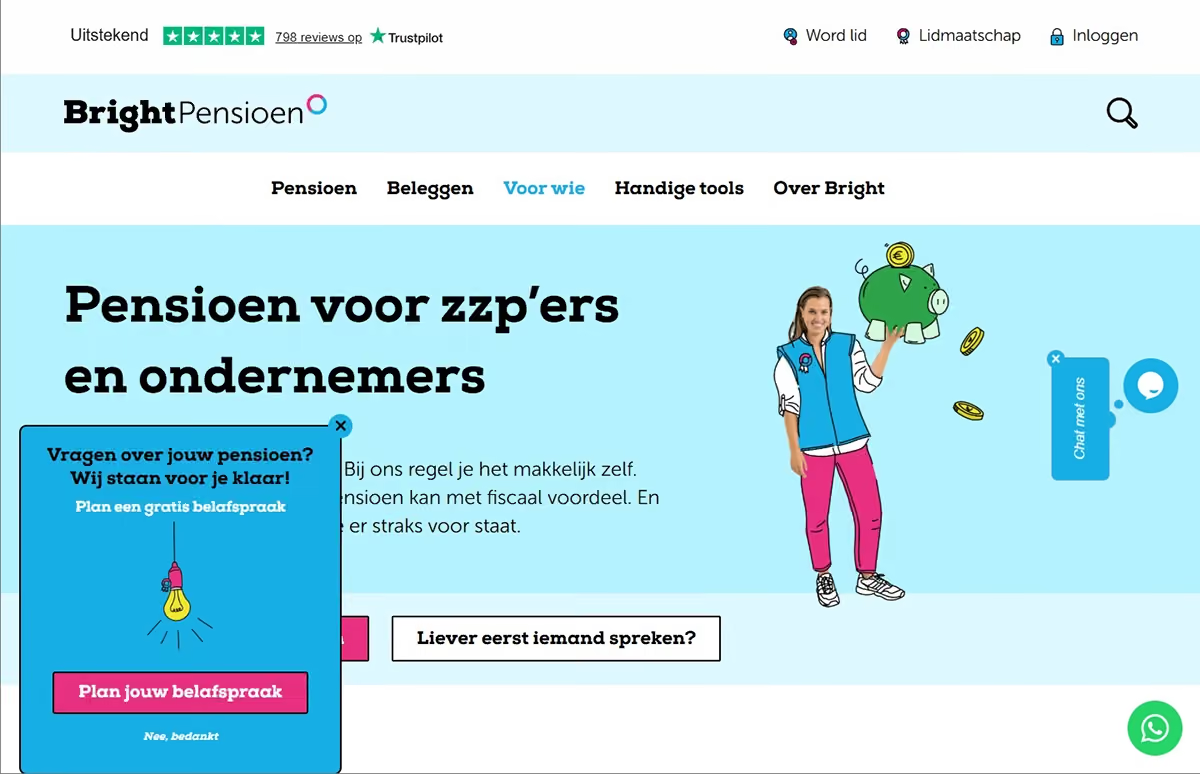
A practical example:
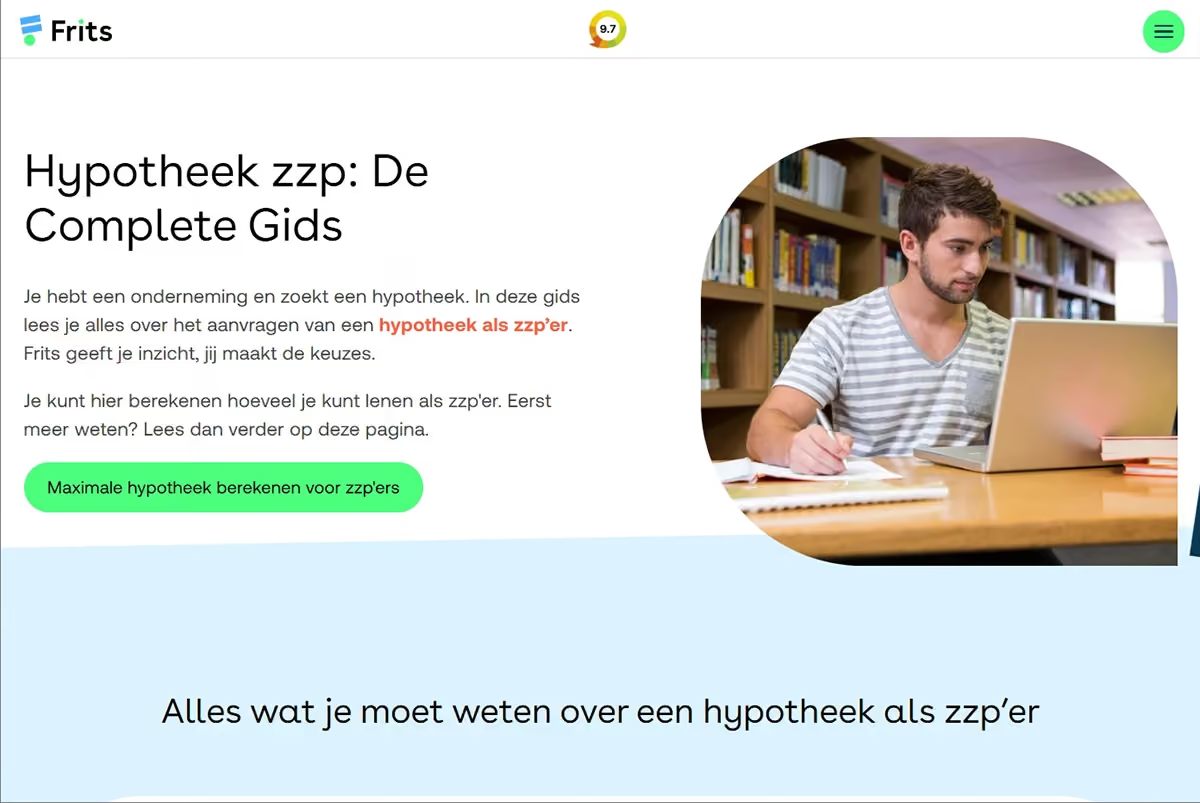
The second question may only be asked a few times a month. Yet the person asking it is infinitely closer to a purchase (taking out a mortgage) than the thousands of people searching in general terms.
So the real opportunity in AI searches lies beyond capturing the masses. The gains lie in giving the perfect, detailed answer to the specific, complex questions of customers who are almost ready to make a decision.
The second important point I want to leave you with is technical precision. You need to understand that an AI crawler collects information differently from the so-called Googlebot.
Here is a simple way to see it:
The conclusion is that you need to hand over information on a silver platter.
Use structured data with Schema Markup
The most effective way to help the AI is to use structured data . This is code (Schema markup) that you add to your website and that acts as "labels" for your content.
This lets you explicitly define the concepts (entities) on your page.
A practical example: for an events agency in Breda, this means using Schema to state the following.

You define the concepts and their relationships, so the AI can skip the guesswork. Although a direct link between Schema and AI citations is still being established, the correlation is extremely strong. It is a best practice for both old SEO and AI, which makes it an absolute must.
Technical precision is no longer a nice-to-have. It is the foundation on which the AI recognises your expertise.
AI is a challenge and also part of the solution. Especially on the technical side, AI can be your best friend. At the same time, the arrival of AI places a tough new demand on your technology.
Speaking from experience, technical SEO can become overwhelming. The good news? You can put AI tools to excellent use to analyse and improve your own website.
Use AI to help you with:
This is a technical point, but absolutely essential.
As mentioned earlier, AI crawlers are simpler than you think. They are 'lazy' and cannot run complex JavaScript to see your content. If your important information (such as product details or prices) is hidden behind JavaScript, the AI crawler simply sees an empty page.
The solution is Server-Side Rendering (SSR). This ensures that all important content is right there in the first HTML code the server sends.

Why does this matter so much? You want the AI to learn the correct price of your product from you, not from an outdated comparison site. So keep your most important content in plain view, outside JavaScript.
A new development I want to share with you is llms.txt. A great new way to 'feed' information directly to AI models (LLMs).
If you are familiar with SEO, you will probably know the robots.txt file. Think of llms.txt as a smart addition to it.

It is a simple text file (in markdown format) that you place on your website. It points the AI straight to the most important information on your site. You bypass any technical hurdles (such as complex code) and offer a clean, direct stream of data.
The file was proposed by Jeremy Howard in September 2024 and is still very much in development.
Use this file to link to your most valuable content:
In short, everything you want to be absolutely sure the AI has in its correct, most up-to-date version.
Just like a sitemap, you need to keep this file up to date. AI models love fresh, new information. By updating your llms.txt file constantly, you send a strong signal that you are a reliable and up-to-date source.
Say you are a manufacturer of medical devices. Your llms.txt file is the perfect place to feed the AI directly with all the crucial, factual information about your company and products.
In it, you can include direct links to:
How does this approach work in practice? Let's look at a client of ours, a training provider that operates nationwide.
The challenge mapped out:
They were losing organic visibility because of Google updates that favoured local results. Their strategy was outdated and out of step with how AI recognises concepts and assesses content.
The solution we provided:
We completely renewed their approach, based on the pillars we have discussed:
The results:
The results were spectacular. After a period of decline, we saw:
This proves that a modern, holistic approach, where technology, in-depth content and brand authority come together, is the way to win.

The final pillar of your new AI strategy revolves around authority and brand reputation. This is one of the biggest mindset shifts in SEO.
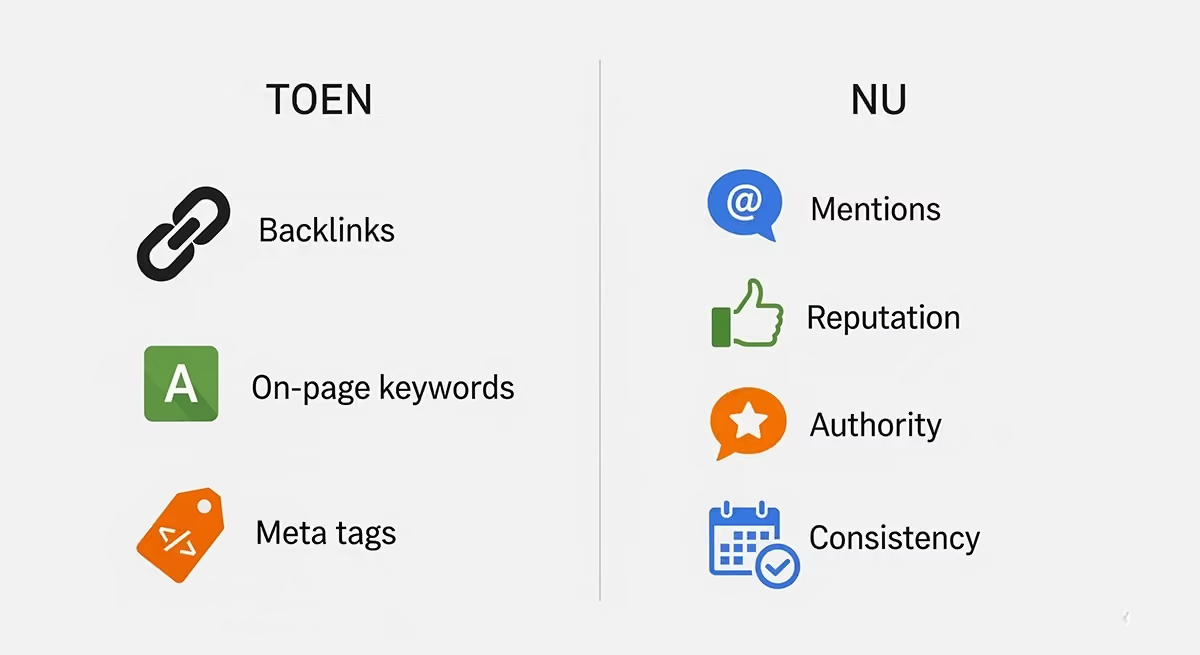
The backlink used to be sacred. Now AI looks further than that. The algorithm scans the entire web for 'brand mentions': every positive mention of your brand name on a reliable website, even without a direct link.
Think of it as a test of your credibility, with points scattered all over the web. When your brand turns up time after time in reliable sources, the AI sees this as a powerful signal of authority. So your visibility is determined by your own website and also by what others say about you.

This calls for a smart, proactive approach to Digital PR. You need to give the media and the AI something they want.
1. Create 'quotable' content: when journalists and experts go looking, they are short on time. They look for bite-sized, valuable pieces of information they can use straight away. These are the most effective content types.
2. Be proactive in your outreach: you need to actively offer your expertise.

The essence of the story: create new, fresh information that nobody else has. That is the fastest route to becoming an indispensable source for media and AI alike, which leads to authority that only grows stronger over time.
You can't manage what you don't measure.
Use specialised AI audit tools. These platforms show you where, when and how your brand is mentioned in the answers of AI models or LLMs.
AI answers are extremely changeable.
An answer you get now can be completely different ten minutes later. That is why it is important to benchmark your visibility continuously. Take screenshots, track the data and keep records.
By monitoring the following three elements, you get a clear picture of your visibility and can keep adjusting your strategy:

AI learns from the whole internet, far beyond your own website.
That is why a multi-channel strategy is essential. You need to strengthen your authority on the platforms the AI sees as reliable.
Focus your content efforts on the following three areas:
1. Forums and communities
Be active on platforms where the insights of peers and users take centre stage. Think of international sites such as Reddit and Quora, plus Dutch industry forums such as Tweakers for tech or Higherlevel for entrepreneurs. AI considers the opinions of 'peers' highly reliable.
2. Educational videos on YouTube
As mentioned earlier, YouTube is one of the sources AI cites most. In-depth explainer videos, product demonstrations and comparisons are worth their weight in gold here.
3. Comparison content
This may well be the most important type of content. When a user asks the AI for a recommendation ("what is the best...?"), the algorithm leans heavily on content that analyses features, pros and cons as well as direct comparisons.
A concrete action point, create content such as:
Always keep this information accurate and up to date, both on your own site and in reviews on other platforms. That way you become the source the AI recommends with confidence.
This is not about endlessly recycling old blogs.
It is about smartly repackaging your existing content, so the AI can understand and trust it (more) easily.
A checklist for your content:

The biggest change may well be the most human factor.
Your team needs to embrace a new mindset.
The new mantra is: think in concepts (entities), not in individual keywords.
This means your marketer, your copywriter and your PR adviser leave their own little islands behind. They need to collaborate closely as one integrated team.
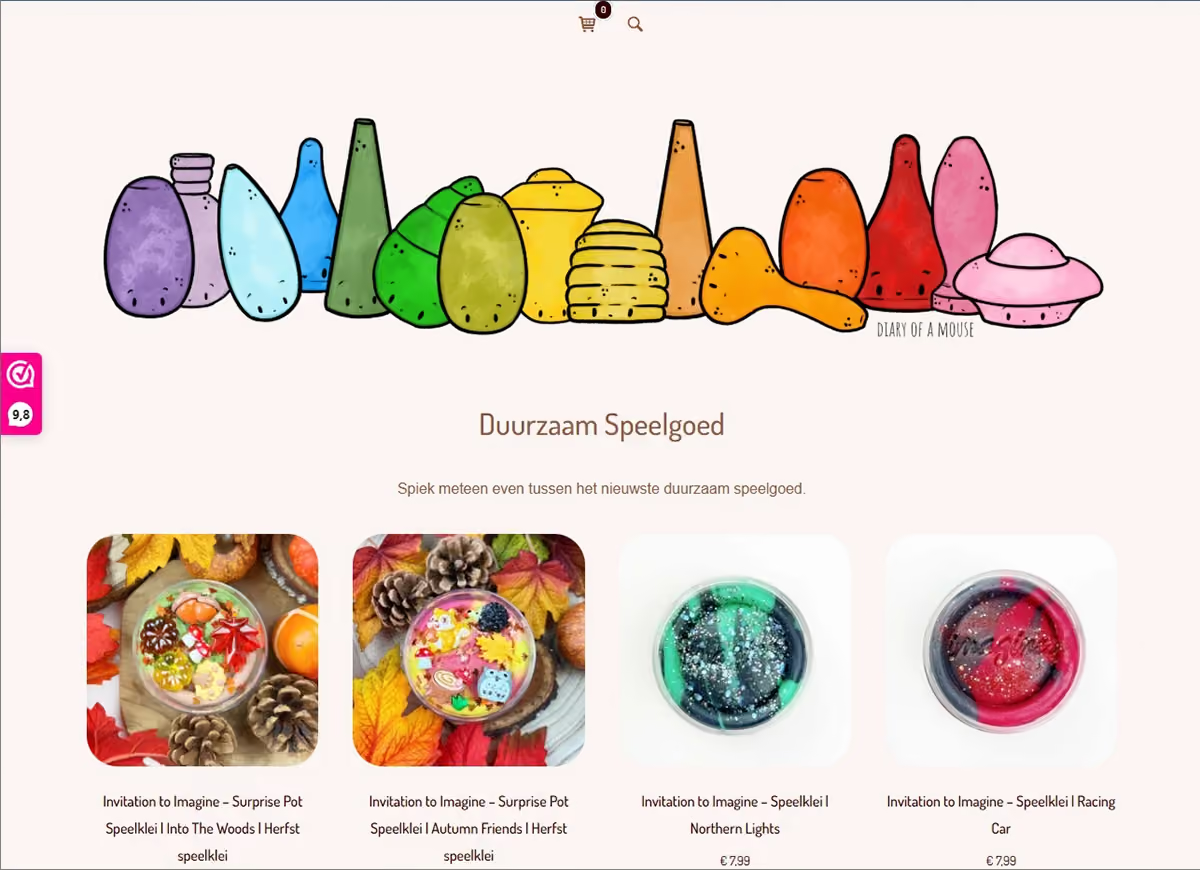
A practical example: for a webshop selling sustainable toys, this means the content about 'material safety' (SEO), the blog post by a guest educationalist (Content) and the press release about a new product line (PR) all need to be perfectly aligned.
The goal is a consistent brand experience everywhere on the web. Because that consistency is exactly what the AI looks for as a signal of authority.
Building a rock-solid AI SEO strategy simply takes time. Do you have a marketing budget? Then use it wisely to speed up the process considerably.
The tactic: promote your very best, most in-depth content (the content with the highest E-E-A-T) on the channels the AI trusts, such as YouTube and relevant forums.
By giving your videos, original research or free tools a paid boost, you build the authority signals you need much faster. You create more engagement and 'hype' around your brand, which shortens your path to success in AI answers.
Think of the push-pull strategy.
First-party data is information you get directly from your audience.
The best way to collect it is through interactive content.

A practical example:
The data you collect this way gives you deep insight into the needs of your customers. Then use these insights to create unique content, personalise your email campaigns and generate leads of much higher quality than those from a blog post alone.
Q: My website is getting fewer visitors, yet my Google rankings are stable. Is the old SEO still effective now that these AI searches are growing?
A: Absolutely, the rules of the game have changed. Focusing only on a number 1 position in Google is no longer enough. The real gains now lie in consistent visibility within AI answers, such as those from ChatGPT or Google's AI Overviews. A visitor who reaches your site via an AI answer is much better qualified and worth up to 4.4 times more. The AI has already done the groundwork. Grow from simply 'ranking' to becoming the most cited expert in your field, on every platform where the AI gets its knowledge.
Q: How do I become the expert an AI wants to cite? Do I need to write my content completely differently?
A: You still write for people, but you package it for the AI. The core is the shift from loose keywords to connected concepts (entities). Stop hunting for keywords and build thematic content clusters that cover a topic in full depth. Make sure your content has the highest E-E-A-T value (experience, expertise, authoritativeness, trustworthiness) and strengthen it with technical precision such as Schema Markup. This lets you 'label' the information on your website, so an AI understands flawlessly who you are, what you do and why you are the reliable source.
Q: If AI gives answers without a click to my website, how do I measure the success and ROI of my efforts?
A: The yardstick has shifted from traffic to influence and authority. The new, essential metrics go beyond website clicks. You measure success by:
The next step
Discover your biggest growth opportunities with a free opportunity analysis (worth €416) — a tailor-made report, free of charge and with no obligation.

About the author
Dominic Pietersz
Your dedicated point of contact
Dominic helps SMEs grow through Google and other channels. With his international experience, he turns challenges into concrete growth.
Follow Dominic on LinkedInInspiration · In a conversation with a client, I finally heard the penny drop that search has changed. That turning point became this piece on the new rules of the game on the road to AI SEO.