


Your brand shows up in ChatGPT, Gemini and Google's AI Overviews. Great. Then comes the question that really matters: what is the return? This GEO playbook gives you the answer.
You as a business owner celebrate the mention and leave it there. Citations, impressions and a spike in traffic feel like a win. Careful, these are signals, not revenue. Search is still here. It now shares the stage with answer engines and your brand has to move with it.
That is exactly what GEO, or Generative Engine Optimisation, is about. Visibility that brings in customers, rather than visibility for its own sake. From a single mention to a visitor who actually buys.
In this playbook you get concrete strategies and a step-by-step plan, from the first mention to revenue in the bank. We start with the figures, because the foundation is clear. We are embracing AI at record pace.
Strategy 1. Content close to the purchase
The first strategy revolves around content that sits close to your revenue. AI engines prefer to show pieces close to the purchase over broad, educational explanations. This is your opportunity. Listicles, comparisons and practical buying guides align tightly with searches that carry high purchase intent, so they appear prominently in the AI answer.
This approach works because it brings your brand into the conversation closer to the conversion. Say you run a webshop selling electric bikes. Your most popular article is called 'how does an e-bike work' and draws lots of visitors. A nice way in. The real revenue sits closer to the till.

So zoom in on purchase intent with content such as 'best e-bike for commuting' or 'mid-drive motor compared with front hub motor'. Pieces like these steer the purchase at exactly the moment someone is ready to check out.
Every strategy suits a different brand, so choose deliberately. A tactic disconnected from your end goal mostly eats up time and quickly turns into digital noise. Think of brands that lean entirely on press releases. Fine as the cherry on top, though a whole plate of cherries is hard to get through.
So always start with an audit. That way you see straight away where your opportunity lies and you build a GEO approach that suits your brand.
Strategy 2. Build your brand across multiple channels
The next strategy builds your brand across multiple channels. AI engines only trust a brand once it is confirmed from several directions. Think of it as a reputation check. If only your own site talks about your brand, the signal stays weak. If you also show up in Google, with reviews on YouTube and positive conversations on forums such as Reddit, the AI reads those mentions as trust. And that is exactly what you want.
Use your own social channels to repeat your core message. Share your newsworthy moments and your expertise widely. That way you stack up digital trust layer by layer.
The data also shows that more channels usually lead to better GEO results. Unsure whether to focus on just a few channels? The figures point towards a broad presence.
Take TikTok as an example. You as a business owner think your ideal customer spends their time elsewhere. Fine. Google, ChatGPT and a few others do strike data deals with TikTok. So they draw data from it, regardless of where your ideal customer hangs out.

This is where your advantage lies. Simply reuse your existing videos from Instagram, Facebook or YouTube Shorts on TikTok. That content then feeds the language models that have such a data deal. So even if TikTok seems to bring you little directly, indirectly it gives you a real push forward.
Strategy 3. Create your own unique data
The third strategy turns you into a source within your field. Google has called this non-commodity content for years, unique material that exists nowhere else. And it is exactly that uniqueness that AI systems reward.
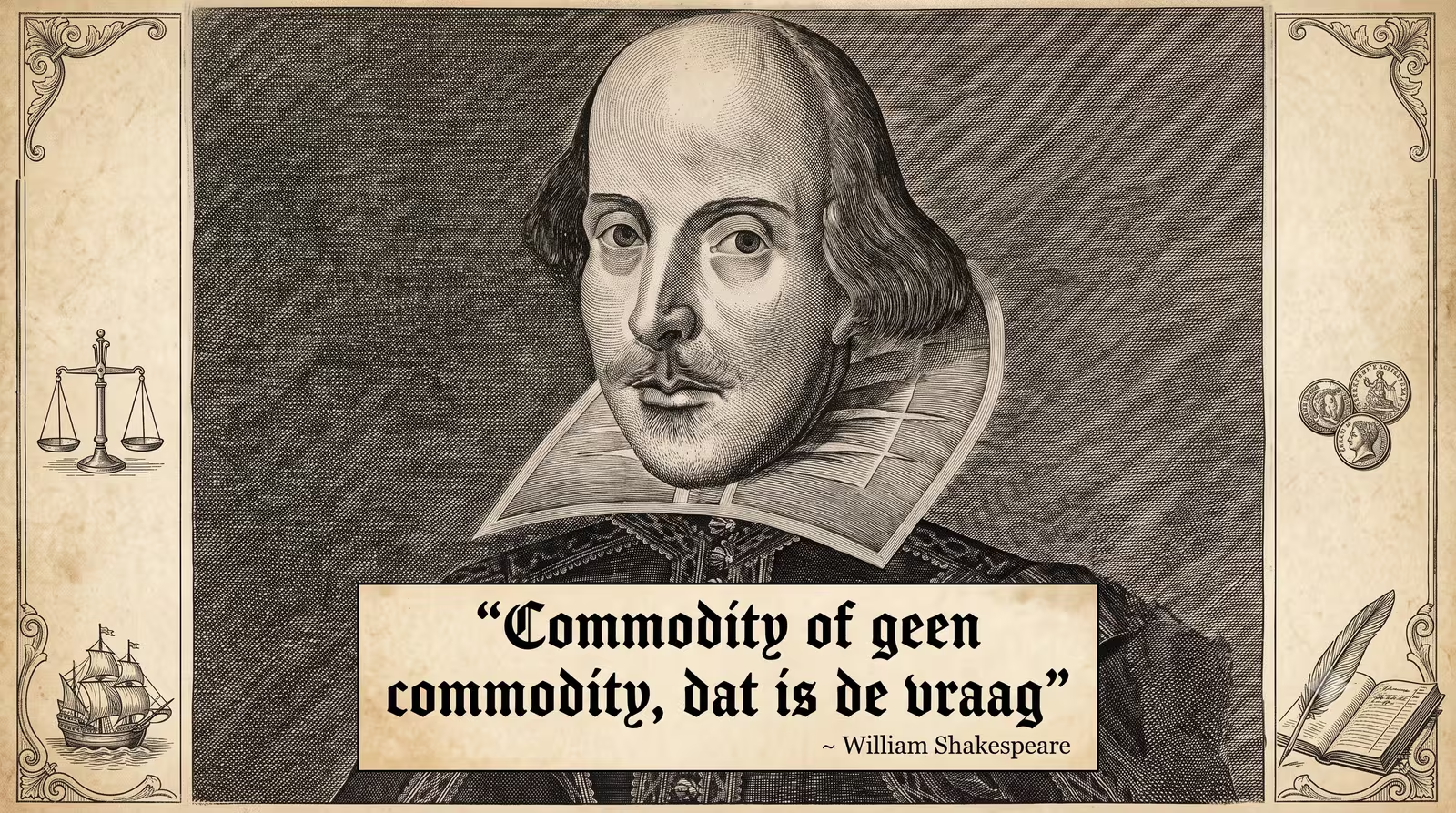
Think of a survey, a case study or a trend report. You create something nobody else on the internet has. That makes it a strong way to position yourself in AI search.
Creating those assets is step one. Anchoring them on your own site is step two. Put your research on a permanent page and the AI links it to your brand, so you get the credit. If you promote the findings away from such a home base, the AI misses the link and struggles to name you as the owner of the data.
Back to the e-bike webshop for a moment. Run a survey among around 2,000 customers. Suppose 68% of first-time buyers prefer comfort over top speed. That insight exists nowhere else online and you link it directly to your brand.
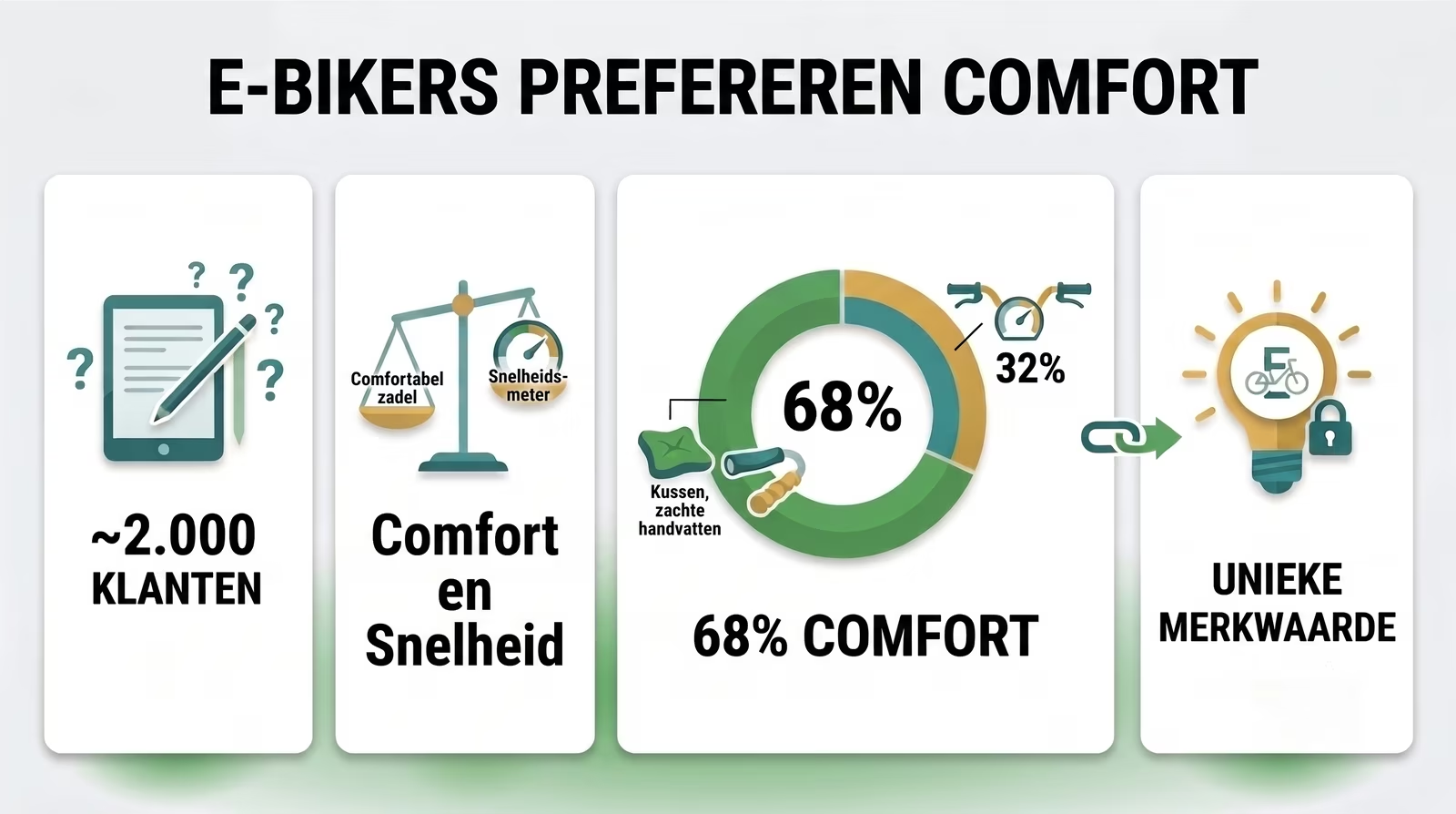
If someone then types 'what should I look for in my first e-bike' into Google or ChatGPT, your brand stands a good chance of getting the citation. After all, you supplied that data.
Format determines the rest. Having the data and putting it on your site is great. The formatting makes the difference. That is where the AI engines crawl your site and give you the right credit. So package your facts with FAQs, expert contributions, clear headings and schema. That way the AI lifts the core from your page effortlessly.
Strategy 4. A website that lets AI visitors buy
The fourth strategy pays off once your brand shows up consistently in AI answers. Now it is all about the experience after the click. Make your landing pages load lightning fast, show strong trust signals, present a clear offer and add interactive tools where they fit. All these elements help the visitor take the next step.
Say the AI assistant recommends your webshop when someone asks for the best e-bike for commuting. A win, because you already appear in that search. If that visitor then lands on a cluttered page with few trust signals, the journey still becomes harder.
So give them something to hold on to. Think of an e-bike selector or a comparison tool that serves up the right match straight away. Elements like these turn AI visibility into real revenue.

The common thread of all four strategies is clear. The goalposts have moved. You curate the experience so the consumer chooses with confidence and your brand grows on the numbers that count.
The question every business owner asks
Sooner or later every business owner asks the same question. So, what is the return? It feels good to appear in all those AI searches and earn citations on ChatGPT and Claude. The real question remains what this delivers for the business.
If you link this to revenue and business outcomes, you keep investing and scaling with confidence. The high-level figures get everyone excited at the start of a campaign. Six or seven months later, when momentum stalls and the link with revenue is missing, things get tense.
Mentions, citations, impressions and traffic show that something is moving. They say little about the value they create. If your KPI leaves the 'what is the return' question open, it is probably the wrong KPI to lead with. Figures like these fit well in the audit phase. After that, you link them back to the brand itself.
We call these vanity metrics. A vanity metric is still a fine figure. It just looks impressive on paper while its value to the brand stays unclear. Tell someone their brand turned up 5,000 times in AI answers and it sounds great. Without context, it remains a vanity metric.
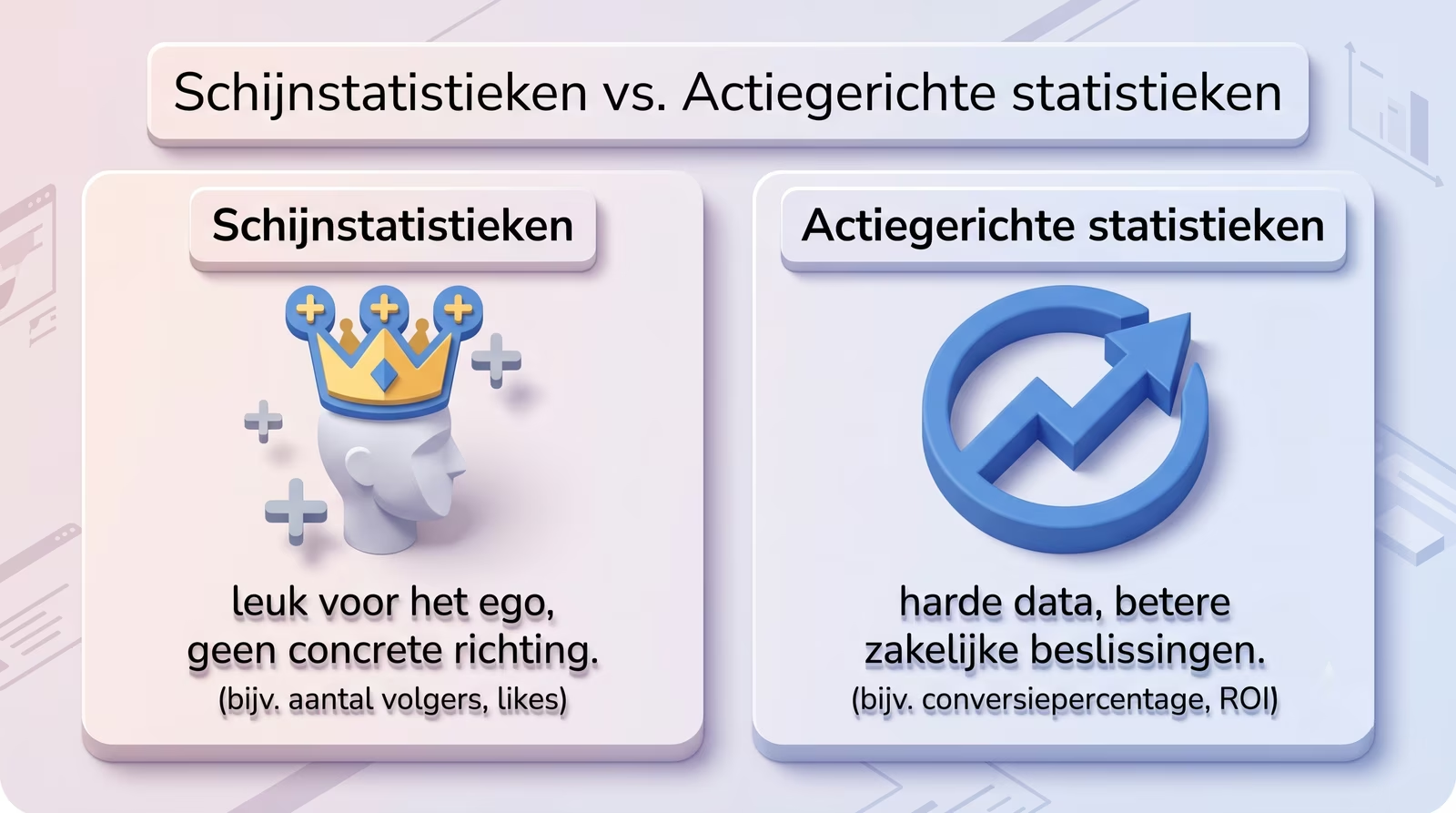
The question that does count is what those mentions actually deliver. Did they attract qualified visitors? Did they influence leads? Did they generate revenue? As soon as you answer those questions, you measure impact instead of popularity.
Measure in the right order
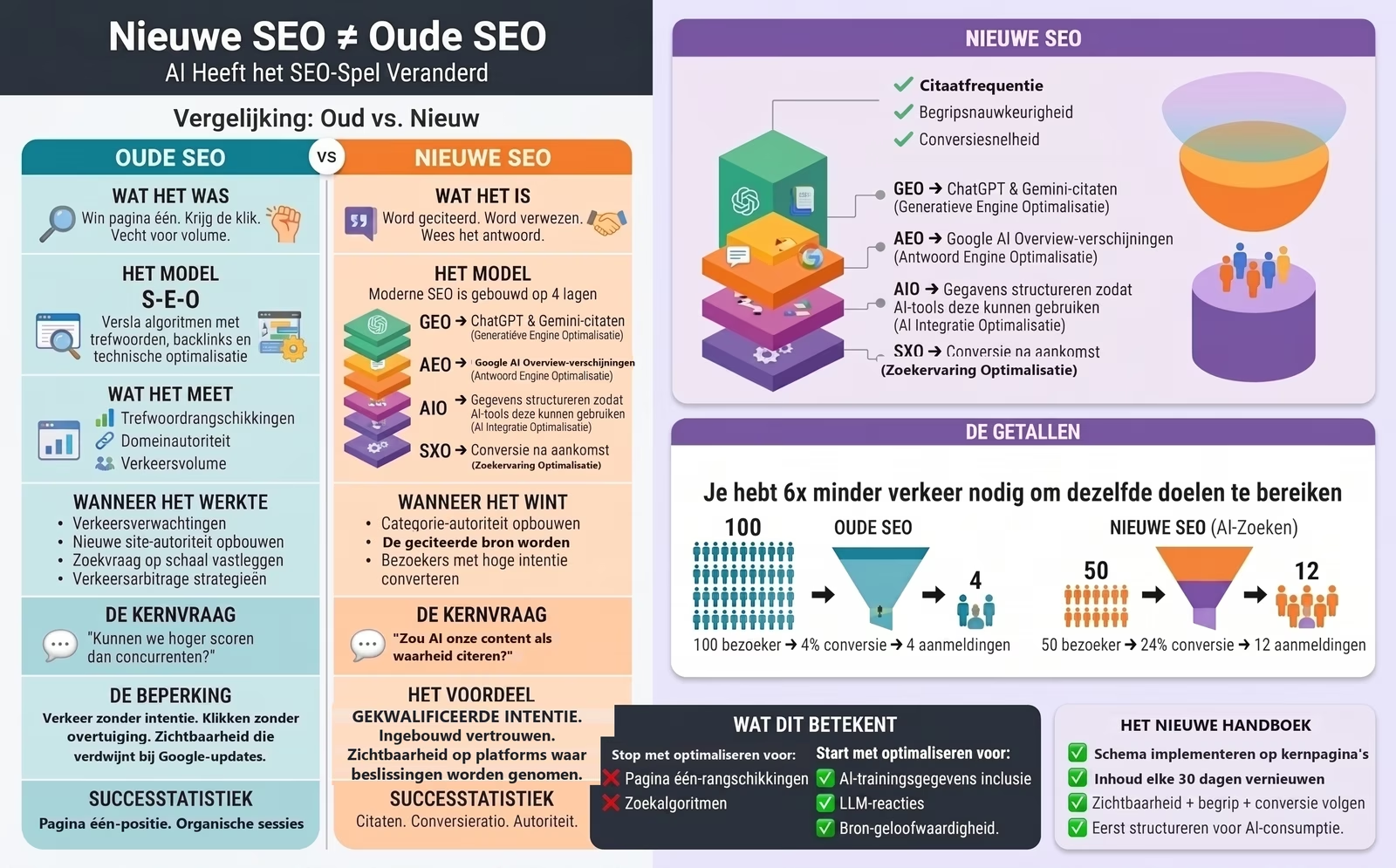
The biggest change is smaller than a complete U-turn. It lies mainly in the order in which you measure success. Most brands start at the bottom, with the vanity metrics. Flip that around and work from the top down.
Start with the business outcome you are after. Many business owners skip this part, yet it forms the foundation. If you throw every strategy at the wall to see what sticks, you miss that anchor. So first decide what your brand wants to see. More revenue? More leads? Higher profitability?

Then link that to the demand signal that supports the outcome. Think of more branded searches, returning visitors, assisted conversions or influence on your pipeline. Only once those two are fixed do you bring in the vanity metrics to strengthen the story.
In short. First the business outcome, then the demand signal and finally your visibility metrics woven in. The goal is to make your story for the client as strong as possible, far more than rebuilding your measurement framework. So always put every visibility metric you track next to an outcome metric.
Measuring your AI citations? Then show the effect on your branded search demand and conversions. Measuring your AI traffic? Link it to lead quality and revenue per visitor. Keep measuring your visibility and make sure a business figure always sits next to it, so everything ties back to your revenue.
The GEO playbook, your 3-month action plan
Where do you score low today? Usually on measurement and attribution. Often on community engagement too. Community engagement goes beyond posting. It builds relevance within communities, through conversations and through ambassadors who carry your brand.

Many businesses handle social distribution well, yet promotion often stops as soon as the post is live. 80% of social media is about promoting, far more than posting alone. PR dimensions help and are a little easier to pick up. Brand authority grows over time, especially with people who have recognition and expertise in the subject. Creating content is one of the easier parts and technical SEO has been around for a very long time. At the top sits the hardest work, which is measurement and attribution.
The reason is simple. No matter how cool something is or how often you are cited, in the end revenue is what counts. Without it, it is still a missed opportunity. That is why we split the first three months into three clear phases.
Month 1
In the first month you map your AI visibility across the big LLMs, from Gemini and ChatGPT to Perplexity and Grok. Definitely look beyond ChatGPT too, towards Meta AI, Gemini and Copilot, because a great many people use these tools.
Meta AI has well over a billion monthly users and is quietly the second most popular LLM, built into WhatsApp, Instagram and Facebook. Gemini sits third with 950 million monthly users in July 2026. ChatGPT leads in first place. Spread your attention, because the long-term winner is still wide open, just as Claude rose strongly out of nowhere.
Businesses use Copilot and Gemini extensively, partly because they are available for free. Free drives lightning-fast market penetration. And these are precisely the businesses with spending power.
Next, track down the high-intent content gaps where competitors beat you to the citations. That is how you set your focus. Then sharpen your structure and formatting with headings, FAQs and concise answers. Put the answer at the top. BNR Nieuwsradio, a Dutch news radio station, does this well by summarising the key points. Answer the question head-on.
Think about which questions people type to reach your page and work a number of them directly into your headings. That way you show that you answer them head-on. Then make sure you really do. These LLMs are smart, so stay honest.

Also strengthen your author and entity signals throughout your content. Become the go-to destination for the topic you choose, instead of covering everything like Wikipedia. Think about your trust indicators too, such as reviews and a consistent brand across all platforms. Collect more positive reviews on a structural basis. AI looks beyond the total number and also pays attention to consistency over time.
And then schema optimisation, because that remains important. Internal links count just as heavily, because they give the bots a clear path to crawl your site. Over half of all web traffic now comes from bots. In 2024, automated traffic overtook human traffic for the first time in ten years and that growth continues. That is how fast bots and agents are taking over the web.
Month 2
In the second month you create original reports and your own data, because they earn plenty of citations. Add comparison content, alternatives pages and buying guides. It is precisely that comparison content that shows high conversion rates once people land on your landing pages. Expand your statistics and FAQs as well, because statistics help you get picked up more often.
Then distribute widely. LinkedIn and YouTube turn out to be sources that LLMs draw on heavily. PR placements and commentary from other experts help a lot. And Reddit counts for plenty, thanks to direct data deals. We see Reddit strongly influencing citations in LLMs. We achieved great results there for clients. Reddit can look a little biased at times. The pattern also shows LLMs drawing on it somewhat less over time than at the start of their data deals. So Reddit remains valuable and optimising for it still pays off.
Month 3
In the third month, conversion tracking becomes decisive. Focus on the whole funnel, top, middle and bottom. Put extra effort into the bottom to see where people drop off. Add tools to your site, such as a calculator or an e-bike selector that shows visitors which model suits them before they order.
Simplify your CTAs, because the more engagement you create and the simpler you make it, the better. If you sell financial services, for example, a clear savings calculator builds trust and makes the choice easier. You offer tools that help people decide, which increases the chance that they convert.
Optimise your assisted conversion paths too. Some of your conversions happen indirectly, which is simply part of the reality of the web. Then focus fully on measurement. Compare conversion quality across the different LLMs. Copilot and Gemini often show strong conversion rates, higher than some other platforms. They may bring less volume, yet every little bit adds up.
Then track the influenced pipeline for AI-specific traffic and build management dashboards that talk about revenue instead of individual brand mentions. You want more visibility and better sentiment than the competition. The goal is always revenue. If it generates revenue, it counts.
You have now seen the full 3-month approach. Complete all of it? Brilliant. Pick a few elements from each month and you are already in a much stronger position. Want someone to guide you through all three months? Then book a free opportunity analysis and we will work out together what you need.
The heart of the matter
A few final points. Whoever acts today will be the hardest to push aside later. That is your advantage.
Just as SEO used to be easier and Facebook ads cheaper, now is the time to act. Most people are still holding back. Those who double down now end up in a much stronger position.
Frequently asked questions about GEO and revenue (FAQ)
What is the difference between SEO and GEO?
SEO helps you rank high in the classic search results. GEO focuses on mentions and citations within AI answers. The two reinforce each other. Strong SEO feeds your AI visibility and AI citations in turn build authority.
How do I measure whether GEO generates revenue?
Start with the business outcome you are after and link a demand signal to it, such as branded searches or assisted conversions. Always put every visibility metric next to a revenue figure. That is how you show the real value.
Which AI platforms should I focus on first?
Start broad. ChatGPT leads in usage. Meta AI reaches well over a billion people via WhatsApp, Instagram and Facebook. Gemini and Copilot are growing fast in the business market. Spread your attention, because each platform attracts different buyers.
More in this series on AI search and GEO