Published
 Updated
🕑 5 min read
Whether you choose Gemini or ChatGPT, both tools offer advantages that match your needs. So can we start planning a big round of redundancies now?
No, you use AI as a writing assistant. Something that can help you write a better piece of content in a much shorter time. To get the results you are looking for from an AI assistant.
In fact, what you want is a dream team in which human and machine work together. We do not simply take a piece of content written by ChatGPT or Gemini and post it straight onto our website, social media or our blogs.
Whatever the channel.
This is about more than performance or ethics. It is about the way we present content to people.
It is important to keep human hands on the wheel.
Getting inspiration for our blog or for our website pages. Something we want to build on our website. Or structuring content and an outline, copywriting or getting past writer's block.
There are plenty of possibilities.



Rewriting something technical that someone knows deeply but gets stuck putting into words, so the right message reaches the target audience.
Bringing two pieces of content together is another way AI can deliver a big result. Take an old piece of content and a new one and let AI merge them.
So it comes across much more naturally, updated.
It can also give you feedback. Look, English is not my native language. What I do next is give that piece of content to AI and have it checked for spelling mistakes - I do make sure no important business data goes along with it. Or whether something can be simplified, done differently or needs a different tone of voice.

With generative AI in terms of text-to-text generation, the possibilities are virtually endless. After all, the foundation of the internet consists of text, images and video.
If you want to generate text and images with these language models (LLMs) - such as ChatGPT and Gemini - this is an excellent way to do it.

In terms of practical input, in other words a prompt, you can build it in any general way you like and decide for yourself how to do it.
The more depth you give the prompt, the better the result. Up to a point, of course. A language model tends to hallucinate once a prompt becomes too complex. The information that comes out then becomes unreliable, so watch out for that.
Here I will show you a few examples, such as for blog post ideas.

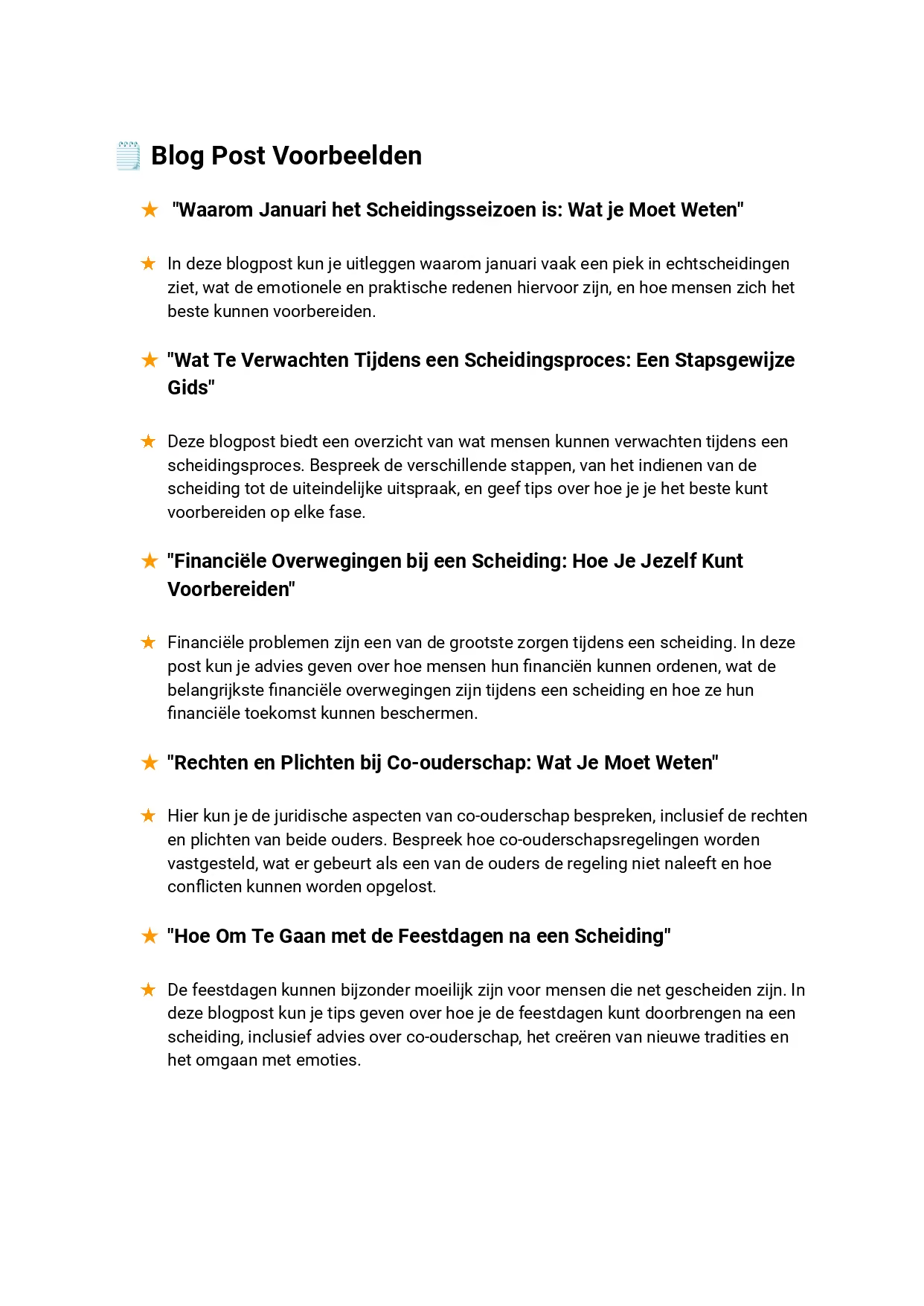
One personal experience was with a client whose subject I did not fully understand. I wrote down the key points and then gave them to AI. I got a specific outline back, which gave me an overview and clarity about what it was really about.
That way I can help the client better, without having to gather too much subject knowledge during our conversations.
With this outline we can get to work creating content. Then we can start optimising with keywords or other data. With SEO campaigns, email campaigns or a LinkedIn outreach message.

You can tackle virtually every aspect of online marketing with it.
When it comes to using helpful prompts - which is sometimes underestimated - you can use data, even in the free version of the language models, to create better output.
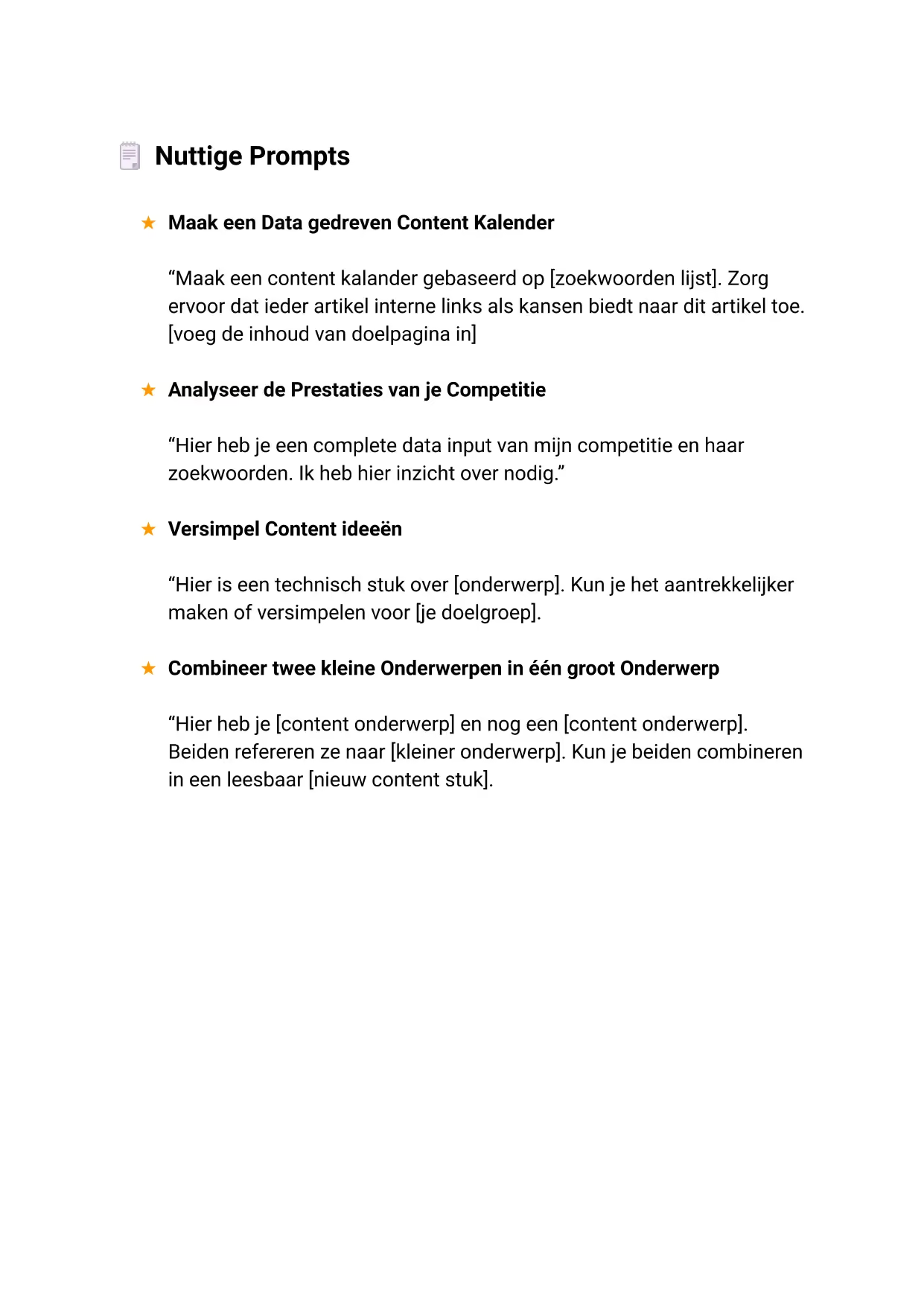
What you can do is use a data-driven calendar based on a set of keywords. It will then cluster and group the keywords and organise pieces of content depending on what you asked for.
You can also map out the performance of your competitors. By giving public raw data to the language model. It will then give you insights, much like a Power BI dashboard would. That capability is built into the language model, so you can simplify your content and ideas.
When I look at a complex piece of content, I ask the language model to explain it in words of one syllable, or even as if to a 5-year-old.
It is hilarious to see what comes out.
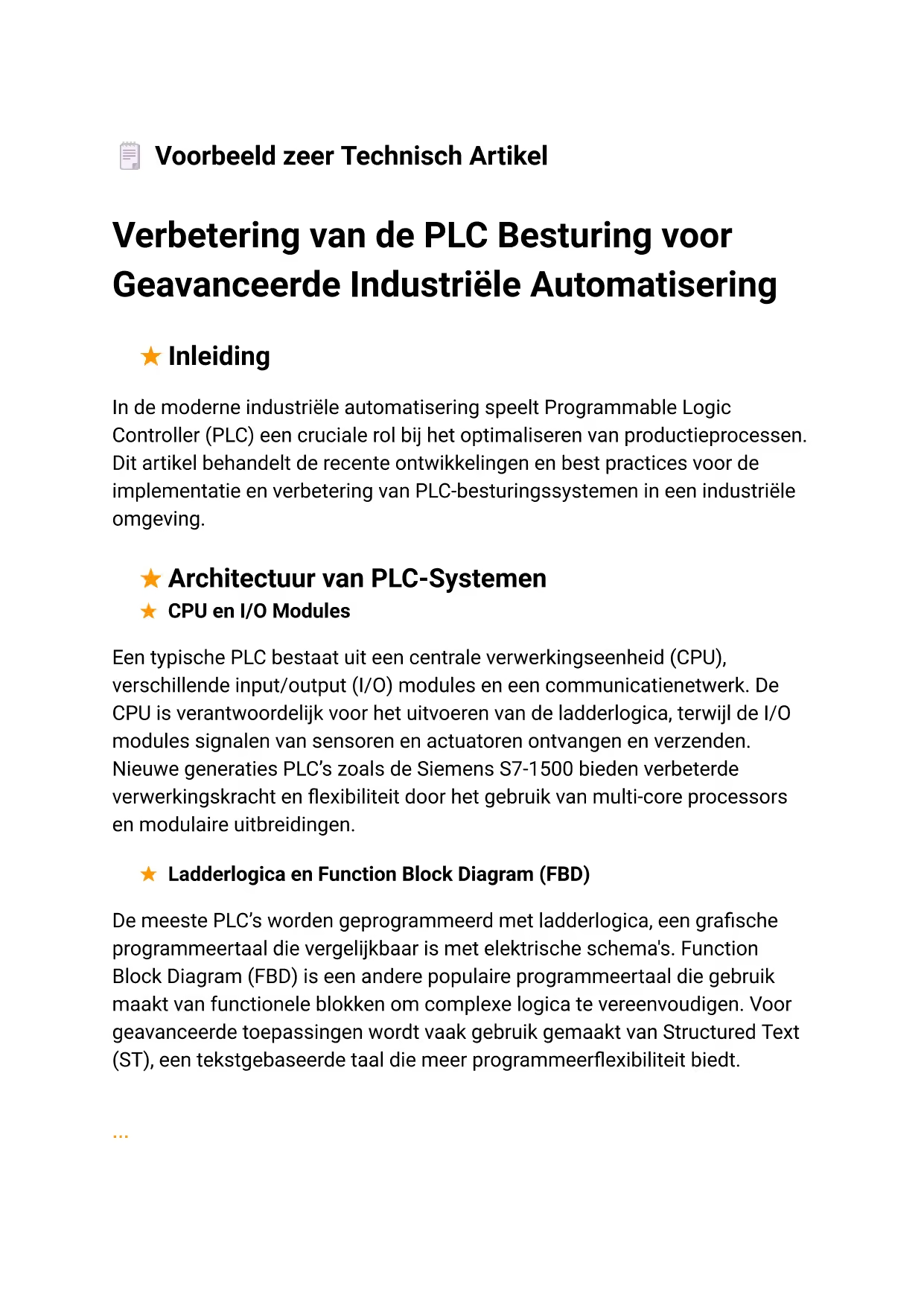


This method works best for extremely technical questions that leave you baffled at first glance.
As I said earlier, you can turn two topics into one big topic. That is often where a search engine specialist finds their challenge. With a massive editorial piece, for example. Where you need to take two pieces of content and turn them into a larger piece or even a smaller one.

AI can help you with all of this.
You can structure an article or blog post. You can get an outline for your article.
A simple prompt is enough to do this. An outline is important when writing an informative article. It gives you a heading, title ideas for the paragraphs or an introduction.
Whatever you want to cover.
In terms of content and the comparison we made between ChatGPT and Gemini, both language models are capable. Whichever you choose, both produce content that is directly editable and especially useful when creating a new piece of content.


You can structure an article or blog post. You can get an outline for your article.
A simple prompt is enough to do this. An outline is important when writing an informative article. It gives you a heading, title ideas for the paragraphs or an introduction.
Whatever you want to cover.
In terms of content and the comparison we made between ChatGPT and Gemini, both language models are capable. Whichever you choose, both produce content that is directly editable and usable when creating a new piece of content.
You can of course also use different kinds of prompts around different topics. If you feel your article needs more body and you want to add to it, you can ask the language model for more inspiration on what you want to write about.
Or on what you have already written.
That way you can go deeper into certain sections. I need titles for every paragraph of my piece of content, or I need a summary for a specific section because I think it is too overwhelming.
I will now share a personal prompt with you that I use myself for adding catchy titles:
As a highly experienced SEO copywriter, I need a catchy title for every paragraph with "..." above it. I need 3 variations for each missing title.

You can take on virtually any challenge with these language models. Because you are the one who decides whether the content is worthy and in line with your intentions. Before you then publish it on your own site or your client's website.
More in this series on creating content
The next step
Discover your biggest growth opportunities with a free opportunity analysis (worth €416) — a tailor-made report, free of charge and with no obligation.

About the author
Dominic Pietersz
Your dedicated point of contact
Dominic helps SMEs grow through Google and other channels. With his international experience, he turns challenges into concrete growth.
Follow Dominic on LinkedInInspiration · A colleague asked, half laughing, whether that writing assistant would take over his job. I looked into it seriously. The answer turned out more reassuring than he feared.