

Your web designer or a competitor mentions SEO and you nod along, while you actually want to know what it involves. Here you can read in plain language what SEO means, how Google works and what actually happens when you have your website optimised.
What is SEO? The meaning in plain language
SEO stands for search engine optimisation. It is all the work that makes sure Google understands your website and that people find you when they search for what you offer. The goal is a higher position in the regular, unpaid search results, with more visitors and enquiries as a result.
Google itself describes SEO as helping search engines understand your content and helping people find your site. After that, the searcher decides whether to visit your page. So SEO works on two sides at once, for the machine and for the person.
Sound familiar? You type your own trade plus your town into Google and mostly see competitors. That says little about your craftsmanship. It does say something about how well Google understands and trusts your website.

What does it get you? Visitors who come to your site at the very moment they have a problem you solve. They find you on their own initiative, at any hour of the day.
In the trade, those regular results are called organic results. They are separate from ads, so a click on them costs you nothing.
SEO helps Google understand you and helps customers find you.
Why SEO matters for your business
According to CBS (Statistics Netherlands), in 2022 90% of Dutch people aged 16 to 75 searched online for information about goods and services, compared with an average of 70% in the European Union. So your customer often starts by searching, even before calling anyone.
In the Netherlands, that search mostly runs through Google. According to StatCounter, in September 2026 Google had a market share of 89.14% among search engines in the Netherlands, compared with 4.57% for Bing.
Buying itself is also moving to the screen. According to CBS, the share of Dutch people aged 12 and over who bought something online rose from 46% in 2012 to 81% in 2024.
Picture a business owner who does excellent work and is invisible online. Their customers search just as much. They simply end up with someone else. SEO makes sure you are visible at that moment of searching.
On top of that, a searcher often has a clear question. Someone who types "dakgoot lekt" (leaking gutter) wants a solution and often also someone who can come round quickly. That makes a visitor from Google valuable for a trade business.
SEO explained: how Google finds and ranks your pages
To understand SEO, it helps to know what Google does before anyone types anything. According to Google itself, Search works in three stages and some pages drop out along the way. Those stages are crawling, indexing and serving search results, as the same page explains.
Crawling: Google drops by
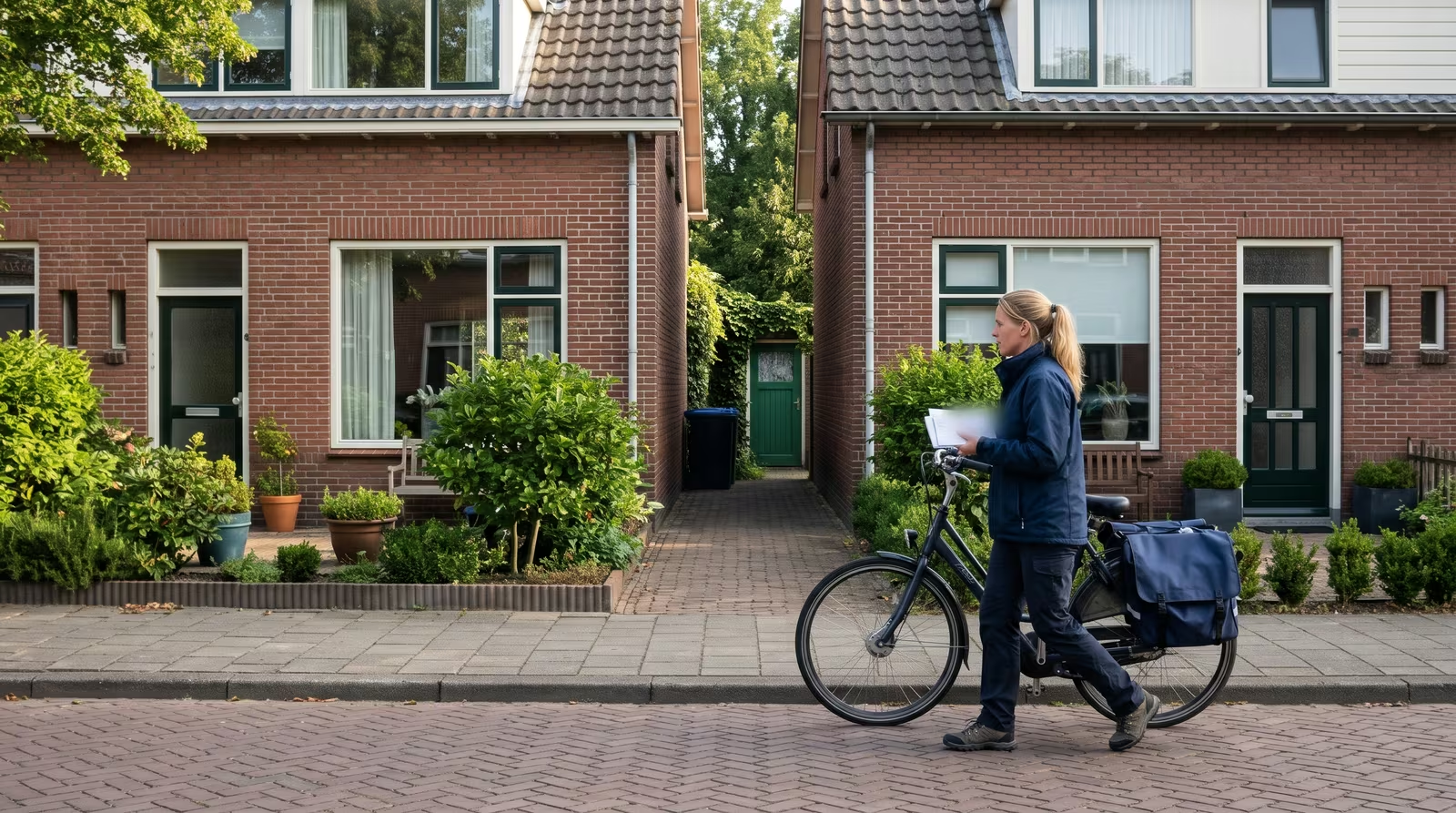
Crawling means that Google's software walks the web and fetches pages. Think of it as a postman who walks every street and goes from door to door via links. If your page sits in an alley with no links leading to it, the postman will struggle to find it.
Indexing: Google stores
During indexing, Google analyses the text, images and videos on a page and stores that information in the Google index, a large database. Only what is in that index can appear in the search results later.
Ranking: Google picks the order
When someone types in a question, Google searches its index for the pages that give the best answer. Google puts those in order, with the most useful answer at the top. That order is exactly what SEO is about.
First found, then stored, only then chosen.
The three pillars of search engine optimisation
Search engine optimisation rests on three pillars that need each other. Think of a three-legged milking stool. Saw off one leg and you end up on the floor.

Technical: can Google read your site?
Technical SEO is about whether Google can reach and read your site smoothly. Think of fast pages, a site that works well on a phone and a logical structure of menus and web addresses. If there is an error somewhere, the postman struggles to reach some of your pages.
Most of this work happens behind the scenes. You can read exactly what our team checks there under technical SEO.
Content: do you answer the query?
Content is everything a visitor reads and sees, from text to photos. Good content answers your customer's question in the words they use themselves. So a painter writes about painting window frames, because that is how their customer types it in.
Also write what only you know. Think of the questions customers ask you on the phone, the mistakes you often see and the choices you would make yourself.
Authority: do others trust you?
Authority is about trust from outside. If another website links to your page, it works like a recommendation. A link like that is called a backlink. A listing with your trade association or on the local newspaper's site builds that same trust.
Local SEO: getting found in your own region
Do you mainly work for customers nearby? Then a fourth element comes in, local SEO.
Imagine someone types "fietsenmaker Utrecht" (bike repair shop Utrecht). A map with a few businesses then often appears at the top, even before the regular search results. Whoever is listed there gets the first look from a customer who wants to drop by that same day.
What counts for that spot on the map is your Google Business Profile, Google's own free business listing. Fill it in completely with opening hours, photos and the right category. Ask satisfied customers for a review and respond to every review.
On your website, it helps if your town and service area come back clearly. If you work in several places, give each region its own page with real content. You can read how our team approaches that under local SEO.
What SEO optimisation involves in practice
So what actually happens when you have SEO optimisation carried out? It is a series of set tasks, from research to maintenance. These are the jobs our team takes on most often.
- Keyword research shows which words your customers actually type in.
- A technical check tracks down errors that block Google's way.
- Every important page gets a clear title and a short description for Google.
- Existing copy gets a refresh, so it answers the searcher's question directly.
- New pages fill the gaps where your customers search and you are still missing.
- Internal links connect your pages, so visitors and Google can easily click on.
- Our team builds listings and links from reliable websites.
- A monthly measurement shows which rankings, visitors and enquiries you gain.
You see that title and description in every search result. They are the heading and the lines of text below it. In the trade, the description is called the meta description and it helps the searcher decide whether to click through.
For a webshop, the focus is often on product pages. For a service provider, it is on pages per service and region.
So SEO optimisation is ongoing work. Compare it to a company van that gets a service every year. If you skip it, the van keeps running for a while and costs you more later.

How long SEO takes, according to Google
When will you notice anything from SEO? Google is remarkably honest about that. According to its own starter guide, one change can take effect within a few hours while another needs a few months.
Google recommends usually waiting a few weeks before you judge whether your work has paid off. So follow along calmly and draw your conclusions after several weeks.

Hidden shortcuts are a myth too. Google itself writes that there is no secret that automatically puts your site in first place. Google also warns that no one can guarantee a number one spot in Google.
If an agency still promises you the number one spot within a month, that tells you enough. You can read an honest timeline per phase in the article on how long SEO takes.
SEO rewards patience and craft. Tricks fall away.
The difference between SEO and advertising
Besides SEO, you can also advertise in Google. Ads carry a label and often appear at the top, even above the regular results.
With advertising, you pay per click. Stop paying and your ad disappears immediately. Advertising works like a coin-operated lamp, which stays on as long as money goes in.
SEO is more like a large south-facing window. Putting it in takes work and time. After that, light comes in every day. That spot is not for sale anywhere either, because Google refuses money to crawl a site more often or rank it higher.

Which should you choose? Often they actually work together. Ads bring in visitors straight away, while SEO builds a solid foundation step by step. You will find a detailed comparison in the article on online advertising versus SEO.
Visibility in AI answers: GEO alongside SEO
Since 20 May 2025, AI Overviews have been available in Dutch in Google Search. Such an overview is a short summary that Google creates with AI, with supporting links included.
What does that mean for SEO? According to Google, AI Overviews and AI Mode have zero extra requirements or special optimisations. The usual SEO basics still apply. A page does need to be indexed and eligible to appear in Google Search with a snippet to be shown as a link in such an overview.
Outside Google, other AI assistants also answer customers' questions. That is what GEO focuses on, short for generative engine optimisation. It is a separate service alongside SEO, with its own goal.

SEO works on your position in Google's search results. GEO works on getting AI answers to mention and recommend your business. If you want to appear there too, take a look at Outsource GEO.
SEO and GEO stand side by side, each with its own goal.
Do SEO yourself or outsource it
Can you do SEO yourself? Part of it, definitely. Updating your Google Business Profile, answering customer questions on your site and checking in Google Search Console which keywords bring in visitors are all easy to do yourself.
The trade-off is time and expertise. A baker descales his own oven and calls a technician for a new burner. SEO works exactly the same way.

Be honest about your own hours. SEO needs steady attention for months. If that fits alongside your work, great. If the technical side gets beyond you or the work keeps getting pushed aside, outsourcing is the logical step.
Our team then takes over the execution, from keyword research to monthly measurement. Dominic remains your dedicated point of contact and explains every step in plain words. You can read how that works under Outsource SEO.
Prefer to talk through your situation first? Then schedule a call with Dominic.
Do yourself what gives you energy, outsource what stalls.
What is SEO? Frequently asked questions
What exactly does SEO mean?
SEO stands for search engine optimisation. It is all the work that helps Google understand and trust your website. The goal is a higher position in the regular, unpaid search results, so customers find you more often at the moment they search.
What is the difference between SEO and SEO optimisation?
In substance, very little. The O in SEO already stands for optimisation, so the term doubles up. By SEO optimisation, people usually mean the hands-on work, such as keyword research, technical checks, better copy and building links.
How soon will I see SEO results?
According to Google, a change can take effect within a few hours or only after a few months. Google recommends usually waiting a few weeks before you assess your work. No one can guarantee first place, according to Google.
Can I pay for a higher position in Google?
For the regular search results, that never works. Google refuses money to crawl a site more often or rank it higher. You can pay for ads. They are marked as ads and disappear as soon as you stop paying.
Is SEO the same as being visible in AI answers?
They are two separate services. SEO works on your position in Google's search results, GEO works on getting AI answers to mention your business. According to Google, the regular SEO basics apply to Google's own AI Overviews.
Can I do SEO myself or is it better to outsource it?
Part of it is easy to do yourself, such as updating your business profile and answering customer questions on your site. Technical work, link building and regular measurement take more time and expertise. That is when our team takes over the execution and Dominic is your dedicated point of contact.